

The biometric cryptocurrency project dubbed Worldcoin is picking up steam, announcing several new high-profile hires this week that include former Google, X (Twitter), and Apple executives.
Tools for Humanity, the developer of Worldcoin, co-founded and chaired by OpenAI CEO Sam Altman, aims to provide “proof of humanness” as artificial intelligence (AI) reshapes how information is gathered and processed online. To support this mission, the Big Tech veterans joining the Worldcoin team bring extensive experience in data security and privacy—issues that have already led regulators to temporarily halt the nascent project in several countries.
Former Google executives Adrian Ludwig and Ajay Patel will join Tools for Humanity as Chief Information Security Officer and Head of World ID, respectively. Former Twitter privacy chief Damien Kieran has been appointed as Chief Privacy Officer, and former Apple executive Rich Heley will serve as Chief Device Officer.
Newsweek reached out to Tools for Humanity but did not receive an immediate response.
What Is Worldcoin?
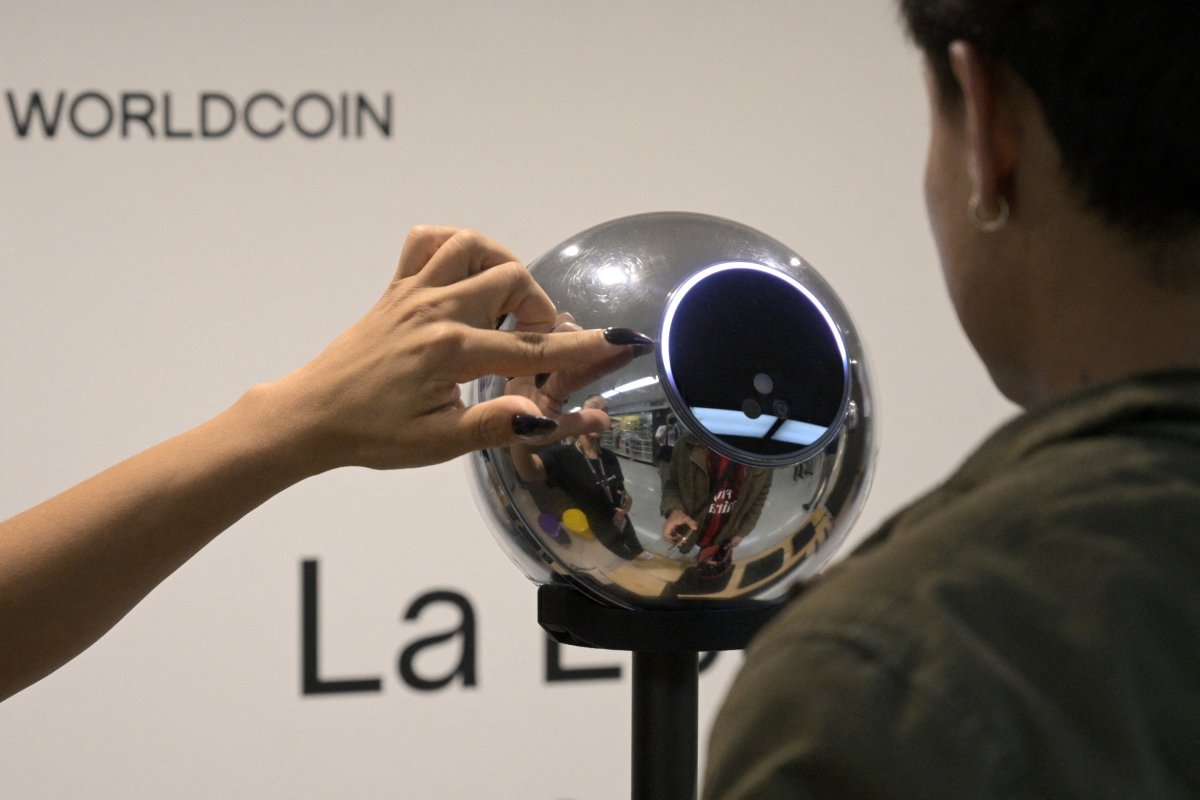
Formally launched last July, Worldcoin is a blockchain-based eyeball-scanning “proof of personhood” initiative, combined with a financial network. It asks users to scan their irises using a proprietary biometric device called The Orb. In exchange, the user receives a “digital ID” as well as a cryptocurrency token, enabling them to make payments using that token.
Part of the idea, as previously outlined by Altman, is that advancements in AI are making it increasingly difficult to distinguish whether a piece of digital content was created by humans or by bots or algorithms. A blockchain-based digital ID allows people to verify their identity across products and applications while, theoretically, maintaining their privacy. Tools for Humanity claims that a person only needs to scan their irises once using The Orb, after which the biometric data is converted into a unique code and permanently deleted, preventing the creation of false identities.
Criticism
Worldcoin has faced controversy and intense regulatory scrutiny since its launch, including a severe critique in the MIT Technology Review. The article accused the initiative of using “deceptive marketing techniques” to “build a biometric database from the bodies of the poor.” It criticized Worldcoin for allegedly sending representatives to villages in Indonesia, offering incentives such as cash or AirPods to recruit people for iris scans.
In response, Worldcoin stated that it has no interest in harvesting personal data: “Worldcoin is only interested in a user’s uniqueness—i.e., that they have not signed up for Worldcoin before—not their identity.”
Government officials have also expressed concern over Worldcoin’s data storage and collection practices. Countries such as Hong Kong, Portugal, Spain, and Kenya have launched investigations or ordered Worldcoin to cease operations. Last month, however, police in Kenya dropped their investigation, allowing the project to resume operations there.
Worldcoin’s New Executive Team
Adrian Ludwig
Ludwig is a well-known Silicon Valley cybersecurity expert who served as the lead engineer for Android security at Google, overseeing the security of the Android platform and Google’s applications and services for Android. Before Google, Ludwig held leadership positions at Atlassian, Joyent, Adobe, and the Department of Defense.
Ajay Patel
Patel previously led the Google Payments identity team and has had a long career as a project manager at the tech giant. Patel, who studied at Northeastern University and MIT, co-founded Abaka Health, which simplifies planning and payments for healthcare. As Head of World ID for Tools for Humanity, Patel will lead Worldcoin’s go-to-market strategy and user experience.
Damien Kieran
Kieran was the deputy general counsel and first privacy chief at Twitter, now X, and resigned in 2022 when Elon Musk took over the social media platform. He was part of an exodus of senior executives from the company’s legal team who left over disagreements with Musk about employee contract violations and other contentious issues during the transition. Kieran later joined BeReal, a social media platform that was sold last month for about $540 million to a French mobile gaming publisher. He will be the main point person for Worldcoin as it navigates increasing regulatory scrutiny over its privacy concerns.
Rich Heley
Heley most recently served as the head of product integrity at Meta, Facebook’s parent company. He led the group responsible for reliability, failure analysis, and safety, as well as certification and compliance engineering. Previously, Heley worked at Tesla for nearly three years as a vice president and spent ten years at Apple in various engineering leadership roles. At Tools for Humanity, Heley will oversee the design and functionality of The Orb.
Moving Forward
As Worldcoin continues to grow, it remains a controversial yet intriguing project at the intersection of AI, cryptocurrency, and biometric technology. By integrating blockchain with biometric verification, Worldcoin aims to provide a secure and private way for individuals to prove their humanity in an increasingly automated world. However, the project will need to navigate regulatory challenges and public skepticism to achieve its ambitious goals. With a strengthened executive team, Worldcoin is better positioned to address these challenges and advance its vision for a decentralized and human-centric digital future.