
Of fact, the meaning of cryptocurrencies varies from person to person, much like the classic blind man trying to understand an elephant they have never seen.
Despite a sharp decrease in value since the sky-high heights of late 2021—Bitcoin’s price fell from about 48 lakh just a year ago to less than 14 lakh today—these cryptocurrencies continue to be of great interest and intrigue. Despite the never-ending stream of negative news highlighted by the complete collapse of FTX last week, there are still a lot of investors who think that “buying the dip” or taking advantage of the current crypto meltdown is a good opportunity to earn money.
Of fact, the meaning of cryptocurrencies varies from person to person, much like the classic blind man trying to understand an elephant they have never seen. The vast majority of retail investors who joined the cryptocurrency frenzy in the last five years thought of the latter as an asset that was simple to buy and trade and could provide rapid and fantastic profits. While a handful of them have done well financially, most of them currently have severely negative portfolios.
Another perspective sees cryptocurrencies as much more than a way to become rich quickly. In the past several years, economists and institutional investors have put a lot of time and effort into exploring and examining claims about whether cryptocurrencies are a form of money or if they are a trustworthy store of value similar to traditional assets.
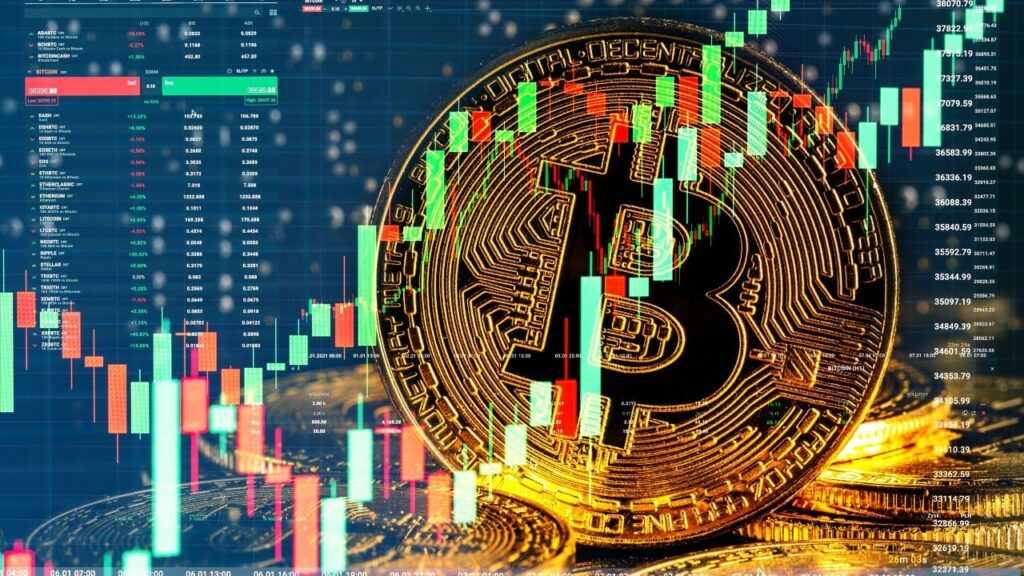
Several of these statements made by crypto believers and preachers have undoubtedly begun to fall apart. It is challenging to consider an item a trustworthy store of wealth when its value might fluctuate by as much as 20% in a single day. Numerous economists have frequently questioned the idea that cryptocurrencies are equivalent to real currencies, pointing out that they can barely replace fiat money as a common form of payment or a “medium of exchange.”
All of this debate leads to the crucial issue that must be addressed today: given the price and value loss we have seen this year, are cryptocurrencies still wise investments? The response is a qualified yes. We need to look at cryptocurrency investments through a new prism: their interaction with central bank interest rates.
Professor of Finance Sofiane Aboura at the University of Paris conducted a ground-breaking study on the possible impact of Federal Reserve policies on Bitcoin price movements. His research, which was released earlier this year, offered proof that the Fed Funds rate reduction in March 2020 (as a reaction to the coronavirus outbreak) had an impact on Bitcoin’s extraordinary price run-up, which caused it to surpass its previous all-time high. The study came to the conclusion that the “primary finding supports the concept that the Fed Funds rates have delayed, threshold, higher order, and spillover impacts on Bitcoins.”
Since there is a substantial negative correlation between the price movement of Bitcoin and US Fed fund rates over the past five years, we may say that a cryptocurrency is a put option on interest rates. This means that buying cryptocurrency today or at any other time in the future would only make sense if the investor believes that US interest rates will decrease in the future and that consequently, the price of the cryptocurrency would soar. On the other hand, gamblers who anticipate an increase in interest rates could be better off delaying their cryptocurrency purchases.
On the other hand, there are some compelling arguments against buying cryptocurrencies. First, the continued worldwide interest in cryptocurrencies has prompted numerous central banks to express concern over potential abuse. Some nations even made the decision to develop Central Bank Digital Currencies in an effort to join the bandwagon (CBDCs). In the fiscal year 2022–2023, the Reserve Bank of India (RBI) intends to introduce its own digital rupee.
It is difficult to predict at this point whether CBDCs will compete with digital currencies like Bitcoin or Ether. The perception of cryptocurrencies in India is still developing. Despite the fact that gains from trading cryptocurrencies are now taxable, trading cryptocurrencies is still very risky due to the constant threat of price volatility.
However, if one believes in the imminence of the Fed policy’s reversal, then cryptocurrencies are undoubtedly here to stay and may even appreciate. Finally, even if one is tempted to use cryptocurrency investments to wager on changes in interest rates, it is always wise to stick to investments that fit within one’s risk tolerance.