
Why Top CEOs Are Stepping Down as AI Reshapes the Future of Business
Artificial intelligence is no longer just a buzzword—it’s becoming a powerful force that is reshaping industries, jobs, and even leadership decisions at the highest levels.
In a surprising development, two major global business leaders have openly said that AI played a role in their decision to step down. The CEOs of Coca-Cola and Walmart have both pointed to a massive shift driven by AI, suggesting that the next phase of business growth requires a different kind of leadership.
This raises an important question: Is AI not just changing how companies operate, but also who leads them?
Let’s break it down in simple terms.
The Big Picture: AI Is Changing More Than Just Jobs
A New Era of Business Transformation
For years, companies have been adapting to digital transformation. But AI—especially generative AI—is taking things to a whole new level.
It’s changing:
- How companies interact with customers
- How decisions are made
- How supply chains operate
- How products and services are designed
Because of this, businesses are entering what many leaders describe as a completely new phase.
And with that comes a need for new thinking at the top.
Coca-Cola CEO’s Perspective: A Shift Toward the Future
Why James Quincey Decided to Step Down
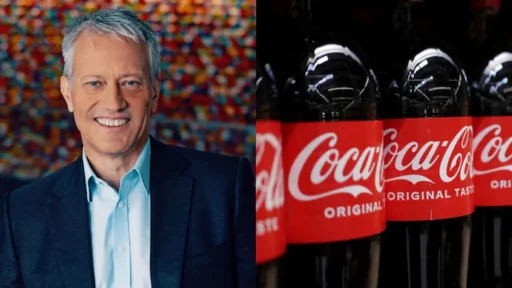
James Quincey, who has been leading Coca-Cola since 2017, recently shared that his decision to step down was influenced by the changing role of AI in business.
His reasoning was simple but powerful: every leader has a responsibility to ask whether they are the right person to lead the next phase of growth.
He explained that while the company made strong progress in what he called a “pre-AI” world, the future will look very different.
A New Phase Requires New Leadership
Quincey believes the company is now entering a new chapter—one shaped heavily by AI and advanced technologies.
Instead of trying to lead through that transition himself, he chose to step aside and allow someone else to take charge.
The next CEO, current COO Henrique Braun, is expected to guide the company through this AI-driven transformation.
Walmart’s Former CEO: Timing Matters in Leadership
Doug McMillon’s Thought Process
Former Walmart CEO Doug McMillon shared a similar perspective.
He acknowledged that while he could begin the company’s next phase of AI transformation, he likely wouldn’t be the one to see it through to completion.
That realization played a key role in his decision to step down.
Thinking Long-Term
McMillon described how he started thinking about the future of retail, especially concepts like:
- AI-powered shopping experiences
- Automated decision-making systems
- Personalized customer journeys
He recognized that these changes would take years to fully implement.
Rather than starting something he couldn’t finish, he decided it was the right time to hand over leadership.
What Is Driving These Decisions?
The Rise of AI Across Industries
AI is not just a tool anymore—it’s becoming a core part of business strategy.
Companies are investing heavily in:
- Automation
- Data analytics
- Machine learning systems
- AI-driven customer experiences
This means the role of a CEO is also evolving.
Leadership in the Age of AI
Traditional leadership focused on:
- Scaling operations
- Expanding markets
- Managing teams
But AI-driven leadership requires:
- Understanding advanced technologies
- Making data-driven decisions
- Leading digital transformation at scale
Not every CEO feels they are the best fit for this shift—and that’s exactly what we’re seeing now.
A New Kind of CEO for a New Era
What Companies Are Looking For
As AI becomes more central, companies may start prioritizing leaders who:
- Have strong tech and data backgrounds
- Are comfortable with rapid change
- Can integrate AI into core business strategies
This doesn’t mean older leadership styles are obsolete—but the expectations are definitely changing.
The Importance of Timing
Both Quincey and McMillon highlighted something important: timing matters.
Stepping down isn’t always about failure—it can be about making the right decision for the company’s future.
In fact, recognizing when to step aside can be a sign of strong leadership.
What This Means for the Future of Work
Not Just CEOs—Everyone Is Affected
If AI is influencing decisions at the very top, it’s also impacting employees at every level.
We’re already seeing changes in:
- Job roles
- Skill requirements
- Hiring trends
The message is clear: adaptability is becoming more important than ever.
Continuous Learning Is Key
As AI continues to evolve, professionals across industries will need to:
- Learn new skills
- Stay updated with technology
- Be open to change
This applies just as much to executives as it does to entry-level workers.
Is This the Start of a Trend?
More Leadership Changes Ahead?
It’s possible that more CEOs will make similar decisions in the coming years.
As AI continues to reshape industries, companies may increasingly:
- Bring in leaders with tech expertise
- Restructure leadership teams
- Focus on long-term transformation
A Shift in Mindset
What we’re seeing is not just a technological shift—it’s a mindset shift.
Leaders are beginning to think less about holding onto power and more about what’s best for the company’s future.
That’s a significant change in how leadership decisions are made.
Final Thoughts
The decisions by the CEOs of Coca-Cola and Walmart highlight something bigger than individual leadership changes.
They show that AI is becoming a defining force in business—one that is influencing not just operations, but also who leads organizations into the future.
Stepping down in this context isn’t a sign of weakness. It’s a strategic move, recognizing that the next phase of growth requires different skills, perspectives, and leadership styles.
As AI continues to evolve, we can expect more changes like this—not just at the top, but across every level of the business world.
The real takeaway is simple: the future is changing fast, and even the most powerful leaders are adapting to keep up.