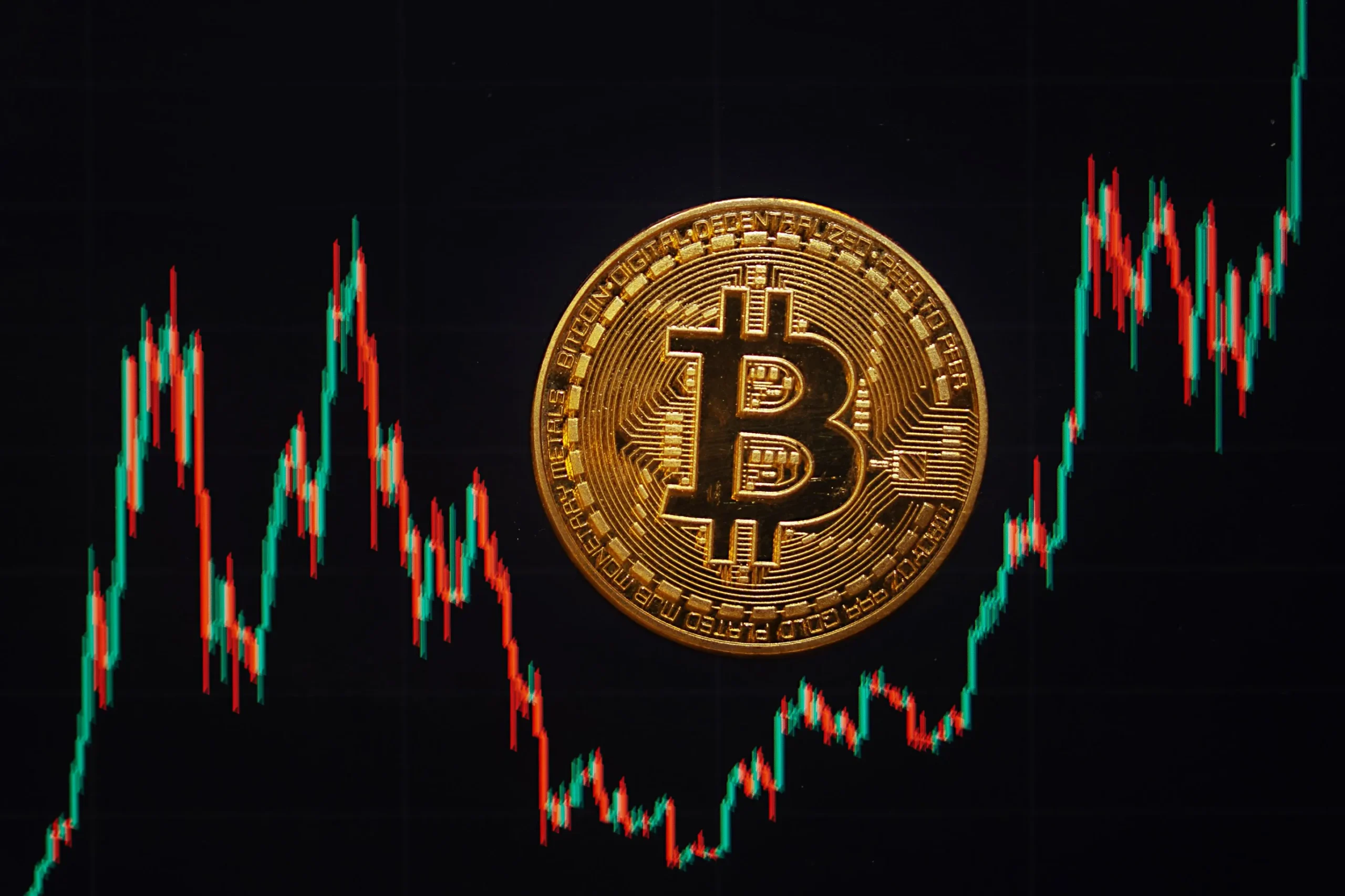


The price of Bitcoin rallied more than 6% on Wednesday to hit a seven-week high of $93,811 as investors cheered recent events in U.S. politics and trade policy. The largest cryptocurrency by market capitalization registered an impressive 6.3% jump, taking its value to $93,811 at 02:35 ET (06:35 GMT). This was its highest since the early part of March, and it indicated another boost in demand from market participants.
The trigger for the Bitcoin price surge seems to be a twofold mix of two major factors: U.S. President Donald Trump’s withdrawal from his previous threats to remove Federal Reserve Chairman Jerome Powell, and his signal of possible trade tariff cuts imposed on China. These political news gave the investor mood a lift, triggering more buying pressure in the cryptocurrency market, which had been suffering from severe price fluctuations in the past few months.
Trump’s Withdrawal of Powell Dismissal Threats
Throughout most of 2019, President Trump had been vocal in his criticism of Federal Reserve Chairman Jerome Powell. Trump repeatedly complained about Powell’s actions to increase interest rates and his monetary policy stance. Specifically, Trump desired lower interest rates to spur economic growth and make the U.S. dollar more competitive in international markets. There were even speculations that Trump could remove Powell from his job, which had resulted in uncertainty in both the traditional finance market as well as the cryptocurrency market.
Yet, in a dramatic policy reversal, President Trump has now signaled that he would no longer be seeking to remove Powell from office. In a statement, Trump admitted that Powell had become “independent” and that his stewardship of the Federal Reserve was now “on track.” The action assuaged fears regarding possible turbulence at the Federal Reserve and placated investors who had worried about the negative effect a leadership shake-up would have on monetary policy.
For the cryptocurrency market, long attuned to changes in mainstream financial policy, Trump’s assurance brought relief. Bitcoin, being a decentralized asset, has traditionally been considered as protection against mainstream monetary policy moves, like interest rate increases or surprise changes in leadership. With Trump’s retraction of threats against Powell, the perceived danger to the general financial system reduced, prompting most investors to set their sights again on the cryptocurrency market.
Possible Relaxation of Trade Tariffs
In addition to his comments on Jerome Powell, President Trump also indicated that he may relax some of the trade tariffs that have been a source of controversy in the U.S.-China trade war. In the last two years, the U.S. and China have imposed tariffs on one another’s goods worth hundreds of billions of dollars, placing economic pressure on both countries and the world at large. But in recent statements, the Trump administration indicated that negotiations for trade between the U.S. and China were moving forward, and the reduction of tariffs may be an option.
The potential for lower tariffs has been seen as a good thing for economic growth across the world, which could have long-term effects on a variety of assets, such as cryptocurrencies like Bitcoin. Most investors feel that lower tariffs would mean more global trade and a better macroeconomic backdrop, which would lead to greater confidence in riskier assets, such as Bitcoin. Specifically, lowered tariffs can soften the tension between China and the U.S., promoting more investment across the world, including digital currencies.
Bitcoin’s Safe-Haven Asset Role
Bitcoin has long been regarded as a viable “safe haven” asset during periods of volatility or economic upheaval. Since it is a decentralized currency with a capped supply, Bitcoin does not experience the same inflationary pressures as do conventional fiat currencies. This has made it a viable alternative to investors looking for a store of value that lies outside the conventional banking and monetary systems.
The recent price rally in Bitcoin occurs when global financial markets have been confronted with a series of challenges. From geopolitical tensions to worries about the slowdown in the global economy, there has been growing demand for alternative assets that are less exposed to conventional market forces. Bitcoin, specifically, has been the beneficiary of this trend, as investors have perceived it as an opportunity to diversify their holdings and hedge against the risks that come with fiat currencies and equities.
The recent jump in the price of Bitcoin indicates that investor confidence is now more optimistic, as market players react to the collective impacts of Trump’s political actions and the relaxation of trade tensions. To most, Bitcoin is a way to have access to a new and nascent asset class that is less affected by conventional economic forces.
Technical Analysis of Bitcoin’s Price Surge
Technically, Bitcoin’s move to $93,811 is a major breakthrough. The digital currency was stuck in a trading range of $80,000 to $90,000 for weeks, with price action looking to consolidate. The recent breakout above $90,000 has triggered fresh optimism among traders, hinting that Bitcoin might keep going higher in the near term.
Fundamental technical indicators like the Relative Strength Index (RSI) and moving averages indicate that Bitcoin is still in a bullish trend. The RSI, which is an indicator of the strength of a trend, is now oscillating in the neutral-to-strong range, suggesting that there is still space for potential upside. Also, Bitcoin’s 50-day moving average is higher than its 200-day moving average, a trend also known as the “golden cross,” which indicates that the cryptocurrency is in an upward long-term trend.
Yet, traders should also be cautious of possible volatility. Bitcoin is well-known for its steep price swings, and although the present rally is reassuring, one must remember that the cryptocurrency market can suddenly correct itself.
Bitcoin’s latest spike to a seven-week high of $93,811 is an expression of optimistic sentiment fueled by U.S. President Donald Trump’s political maneuvers, such as pulling back on threats against Federal Reserve Chairman Jerome Powell and potentially relaxing trade tariffs against China. These actions have boosted investor optimism, driving Bitcoin to record highs. As Bitcoin increasingly gathers momentum as a store of value and protection against conventional market volatility, the prospects for the currency are rosy, though there should be vigilance against any near-term volatility.