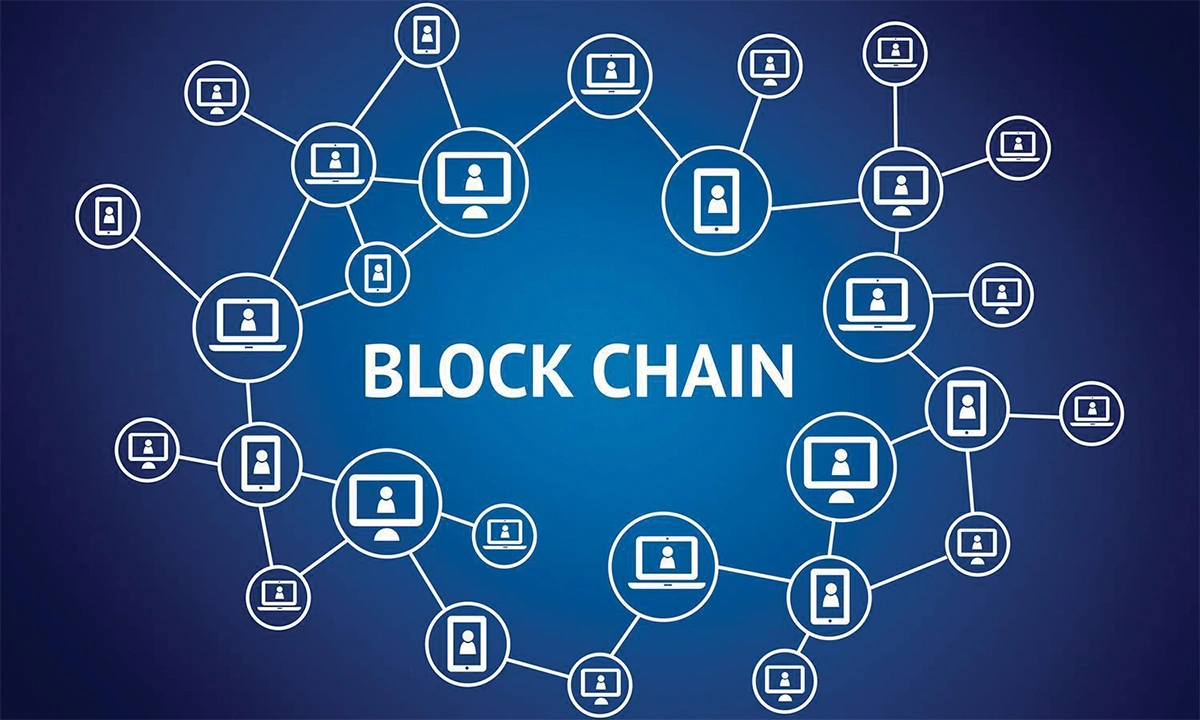


According to reports, businesses including Walmart, IBM, Maersk, and FedEx have begun implementing blockchain to supplement their ERP.
Enterprise resource planning (ERP), which refers to the integrated management of key business activities, is thought to benefit from technology’s decentralized and distributed ledger protocol as blockchain-based applications advance. A business management consulting firm called Ultra Consultants predicts that the value of blockchain to businesses would surpass $176 billion by 2025 and $3.1 trillion by 2030.
The worldwide blockchain-as-a-service (BaaS) market size was estimated by market research firm Fortune Business Insights to be $1.90 billion in 2019 and to increase to $24.94 billion by 2027 at a compound annual growth rate (CAGR) of 39.5%.
“ERP systems are widely used by businesses to improve their operational efficiency. Combining blockchain and ERP has the ability to close the trust gap across compartmentalized ERPs while enhancing system visibility. Blockchain technology may be useful for automating transactions through smart contracts in addition to retaining records, according to Pratik Gauri, founder, and CEO of 5ire, a platform built on the technology.

Experts claim that blockchain-based ERP systems can assist in the processing of data in relation to activities like the production, encryption, validation, and dissemination of important and irrevocable records and transactions, among other things. Fortune 500 companies, as well as global SMEs and micro, small, and medium-sized businesses (MSMEs), are anticipated to integrate blockchain technologies into their ERP systems, according to Mipro, an electronics manufacturer.
Blockchain is a distributed ledger, whereas ERP integrates several organizational activities in an efficient manner. Together, they are able to offer a platform with automated procedures, privacy, and security. Additionally, they may cooperate to improve database administration frameworks, according to Prashant Kumar, creator, and CEO of a platform focused on cryptocurrencies.
Apparently, businesses like Walmart, IBM, Maersk, and FedEx have begun implementing blockchain to improve their ERP or supply chains. A software startup called EOS Costa Rica develops blockchain-based ERP solutions for all types of businesses and contributes resources to the EOSIO network. Banks and insurance firms want to use blockchain-based ERP systems to make sure that business-to-business (B2B) transactions and payments are automated and risk-free based on information supplied by ContenteraTechSpace, a technical blogging platform.
Additionally, according to market-driven research, both Bitcoin and Ethereum have contributed technological advancements to the creation of blockchain-based ERP systems. Blockchain is anticipated to be the main technology for managing intercompany transactions by 45% of industry executives, according to market information company International Data Corporation.
“The optimization of all company activities across several organizations is made possible by the blockchain and ERP interface. Nearly half of the sector’s top players will need blockchain-based ERP to manage intercompany transactions, in my opinion. Businesses that connect with blockchain-based ERP systems have the ability to operate at their peak efficiency and generate better long-term profits, according to Rajagopal Menon, vice president of cryptocurrency exchange WazirX.